Nimat Alesh's Corner

Everything that keeps life going

Breaking

Showing posts with label ART AND CULTURE. Show all posts

Tuesday, 26 June 2018

6/26/2018 11:52:00 am

OSUN - OSOGBO SACRED GROVE, HERITAGE OF YORUBALAND

The Osun-Oshogbo Grove is among the last of the sacred forests which usually adjoined the edges of most Yoruba cities before extensive urbanization. In recognition of its global significance and its cultural value, the Sacred Grove was inscribed as a UNESCO World Heritage Site in 2005.
Reckoned as a holy place by a majority of Nigerians, this place is said to be the home of the goddess of fertility Osun, belonging to the Yoruba gods. It is located on the fringes of the city of Oshogbo surrounded by dense forests. The surrounding areas of the Osun-Oshogbo Sacred Grove are filled with sanctuaries and holy shrines, as well as sculptures and illustrations depicting Osun and other Yoruba gods and goddesses. Because of its rich natural diversity, its often referred to as one of the popular sacred forests of the world.

This place has a religious and mythological significance to the people of Nigeria, and since then has been an object of fascination for foreign tourists. The Osun River flows through the Yoruba countryside forming into lagoons later. Oshogbo is a well-planned town and the annual Osun Oshogbo festival is the talk of the town for it offers an amazing glimpse into the rich Nigerian traditions and culture.

Every year, the Osun-Oshogbo festival is celebrated in the month of August at the grove. Yearly, the festival attracts thousands of Osun worshippers, spectators, and tourists from all walks of life.
For the people of Oshogbo Land, August is a month of celebration, traditional cleansing of the city and cultural reunion of the people with their ancestors and founders of the Oshogbo Kingdom.

Ina Olojumerindinlogun
The Osun-Oshogbo Festival is a two-week-long programme. It starts with the traditional cleansing of the town called 'Iwopopo', which is followed in three days by the lighting of the 500-year-old sixteen-point lamp called 'Ina Olojumerindinlogun'. Ina Olojumerindinlogun, the sacred lamp lit at the beginning of the annual Osun-Oshogbo festival
Then the 'Ibroriade', an assemblage of the crowns of the past ruler, Ataojas of Oshogbo, for blessings. This event is led by the sitting Ataoja of Oshogbo and the
Arugba, Yeye Osun and a committee of priestesses.
The Osun Oshogbo festival also serves as a strong unifying factor in Oshogboland, as irrespective of the different social, economic, religious and political convictions of the people, they all come together annually to celebrate the goddess.


6/26/2018 09:00:00 am

WHAT YOU NEED TO KNOW ABOUT THESE NATIONAL HEROES - PT2


History can't be complete without mentioning the names of these heroes because they made the bedrock of politics in Nigeria. This information on national heroes of Nigeria reflects the political struggle of the country and the significant contribution of these leaders in this respect.


AHMADU BELLO


Sir Ahmadu Bello was born on June 12, 1909, in Rabbah, near Sokoto. His father, Ibrahim, the chief of Rabbah was a grandson of Usman Dan Fodio, the Fulani religious leader. After his primary education in Sokoto, he attended Katsina higher college where he was a contemporary of Sir Abubakar Tafawa Balewa. For three years, Sir Ahmadu Bello taught at Sokoto middle school, and later became the district head of Rabbah. Following a local government course in England, he was appointed the secretary to the Sokoto native authority.
Ahmadu Bello with Nnamdi Azikiwe
He later became involved in politics; he took an active part in the rapid political changes that preceded Nigeria’s independence. He was one of the founders of the Northern People’s Congress (NPC) in 1951.
He was at different times, the regional minister of works and local government and community development.
He was appointed in 1954, the first premier of northern Nigeria.
He is said to have exercised great influence on the then prime minister, Sir Abubakar Tafawa Balewa.


 TAFAWA BALEWA


Sir Tafawa Balewa was born in 1912 in Tafawa Balewa, Bauchi. After receiving his elementary education at Bauchi provincial school, he went to Katsina higher college in 1928. When he qualified as a teacher in 1933, He went to teach at Bauchi middle school. He attended the institution of education of the University of London and on his return, he was appointed education officer for Bauchi province.
In Bauchi, he joined the Bauchi discussion circle which soon became a forum for voicing African aspiration. He entered politics with the implementation of the Richards’ constitution. He was one of the founders of the northern people’s Congress (NPC). He was a member of the northern house of assembly from which he was elected to the Nigerian legislative council in Lagos in 1946. He took an active part in the constitutional talks between the years 1949-50. He was the minister of works in 1952 and in 1954 he was appointed the minister of transport. In 1957, he became the first prime minister of the federal republic of Nigeria.
Surviving a stormy federal election in 1964, he was reappointed prime minister, a post which he retained until his assassination on January 15, 1966.


Monday, 25 June 2018

6/25/2018 08:58:00 am

WHAT YOU NEED TO KNOW ABOUT THESE NIGERIA HEROES - PT1


Talking about our heroes past, the national heroes of Nigeria are notable for their huge commitment in their relative field. Their diligent work alongside their capable authority abilities discovered path into a huge number of Nigerian hearts. A portion of the prominent national saints of Nigeria have additionally made awesome statures of progress in the universal field.
Here's imparting to you a few actualities on national heroes of Nigeria


HERBERT MACAULAY


Herbert Samuel Heelas Macaulay was born in Lagos on November 14, 1864. His mother was one of the daughters of Bishop Ajayi Crowther.

After his secondary school education in Lagos, he went to England where he qualified as a licensed surveyor. He joined the civil service but later went into private practice. He established his paper, The Lagos daily news through which he established bitter protest against the British administration in Nigeria.

By 1922, after the introduction of the Clifford’s constitution, Herbert Macaulay launched the Nigerian National Democratic Party with the intention of fighting the four seats allocated to the Africans in the newly created legislative council; his party won the four seats.

He consistently championed the cause of the king and people of Lagos against British rule. His role  in the famous Apapa land case of 1921, his leading part in the Eshugabyi Eleko versus government of Nigeria case of 1928; his leadership of the many protest movement over rate, taxation and land acquisition by government are some of the highlights of his brilliant career in rousing early nationality sentiments in Nigeria. Herbert Macaulay was the first president of the NCNC.


He was often referred to as the father of Nigerian nationalism; his ceaseless struggle for independence stirred the people to national consciousness. He died in Kano in 1947 at the ripe age of 82 during the famous NCNC nationwide tour against the Richards’ constitution.


NNMANDI AZIKIWE


Nnamadi Azikiwe was born of Igbo parentage at Zungeru in northern Nigeria in 1904. After his secondary school education in Onitsha and Lagos, he later worked as a government clerk in the treasury in Lagos from 1921 to 1925 before he left for the United States of America. He studied political science in the United States.

During his stay in America, he was strongly influenced by his experience of colour discrimination and cruelty and by Negro nationalism which reached its peak in the Garvey movement there, he realised the immersed power of newspaper as effective organ of propaganda and so studied journalism. In 1934, he returned to West Africa determined to fight for the emancipation of Africa from colonial rule.

He started his journalistic career in gold coast (Ghana) and returned to Nigeria in 1937.
He established many newspapers, prominent of which was the West African pilot. With his chain of newspapers, he highlighted the injustices of colonialism.

He was the founder and leader of the NCNC. He supported the general strike of Nigerian workers in 1945. His political activities carried him to various parts of the country.

In 1954, he became the premier of eastern region and led the region to achieve self government in 1957. He took part in various constitutional conferences aimed at achieving independence for the country.

In 1959, his party, the NCNC formed an alliance with the NPC and Azikiwe became the president of the senate.

At independence in 1960, Azikiwe became the governor-general of the federation. In 1963, he became the ceremonial president of the federal republic of Nigeria.
He was the leader of the proscribed Nigerian peoples party (NPP) from 1979-1983.


Friday, 8 June 2018

6/08/2018 02:14:00 pm

NUTAF 2018 KICKS OFF


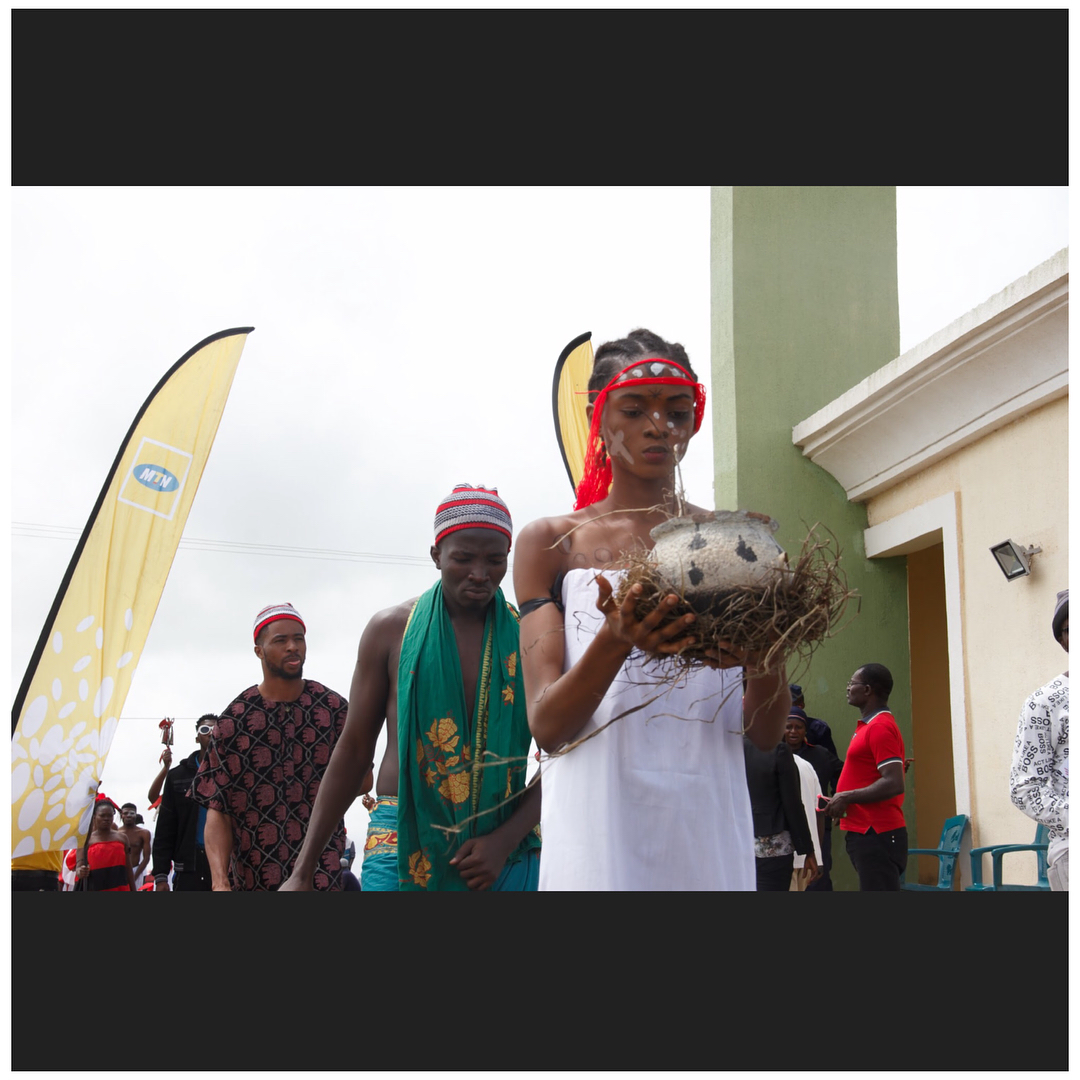
Students of drama across the nation’s universities under the auspices of the Nigerian Universities Theatre Arts Students Association (NUTASA) are currently at Plateau StateUniversity to celebrate the annual festival. Nigerian Universities Theatre Arts Festival (NUTAF) brings together students of Theatre, Dramatic and Performing Arts from various Nigerian universities.


The Nigerian Universities Theatre Arts Festival is aimed at promoting education and national unity; cultural orientation among the youths; enhance talent and creativity among Theatre art in Nigeria.


Great things happen when we come together for the Arts. MTN as a brand recognizes the effect of Art and culture and further reiterates her appreciation for the craft by supporting laudable initiatives along this line.


The festival was born out of the need for togetherness, a common disciplinary identity, learning and development. The first edition of the festival held at the Arts Theatre, University of Ibadan in April 1981. Since then, NUTAF has held annually rotating from one university to another.

This year’s NUTAF is powered by MTN.


Featured

Blog Archive